Art & Fashion
Art and fashion provide a vital perspective on the creative and aesthetic values of the early modern period. As England transitioned from the medieval era, the artistic aspects of daily life evolved alongside shifting social structures. Accessories became essential tools for navigating these changes. While these items served functional purposes, they also allowed for self-expression and individuality. Accessories served as physical markers of eminence, visually displaying an individual’s power and wealth. As the middle class emerged, a new desire for materialism took hold. This shift moved beyond mere necessity. It was a transformation in how citizens viewed their place in the world. People no longer dressed simply to satisfy tradition but to negotiate their status. In addition to the way ornamentalism involves objects placed on the body, it also carries deeper psychological implications in defining the wearer by representing their identity, status, wealth, and gender. Accessories functioned as a silent language, allowing early modern people to communicate their authority and personal taste without speaking a single word.
For as long as humankind and throughout all cultures, the arts have existed. And for as long as the arts have existed, they have been used to express the ideas of artists, to convey messages to the audience that resonate on a deeper level than what could be conveyed with mere words. With the rise of the Tudor period, the reach of the arts expanded and flourished during the early modern period. Europe saw an increase in the production of the fine arts, with England’s portraiture in particular being very strong. Just like accessories, art was a way to represent beauty, power, and present abstract concepts. Examining early modern English art gives us a glimpse into the lives of the people of that era, their values reflected in each piece, and the stories behind them.
Long before the age of social media, people were carefully constructing how they wanted to be seen. In early modern England, clothing was not a matter of personal taste it was a public declaration. What you wore communicated your rank, wealth, and place in society, and for those who could not access the right garments through legitimate means, some went as far as stealing them. Portrait miniatures of the period took this further, with subjects staging themselves through deliberate pose, expression, and dress to project a specific identity to whoever was watching. This desire to control how one appears to others, whether that be through clothing, image, or carefully chosen accessories, is something modern audiences will recognize immediately. Today, it plays out through outfit photos, highly personalized social media profiles, and the calculated choices people make about how to present themselves online. The impulse is the same. Only the platform has changed. Curated self-presentation is not a modern invention, it has roots that stretch back centuries.
Items

Accessories
Written by Vienna Thao
Tiny Bottle, Big Statement
Scent bottles have existed throughout time to hold perfume and were important for early modern people as well. People wore them around the neck or waist to ward off bad odors. They often contained flower distillations or spices, making them useful across all social classes. Yet they also served another purpose; they were fashionable.
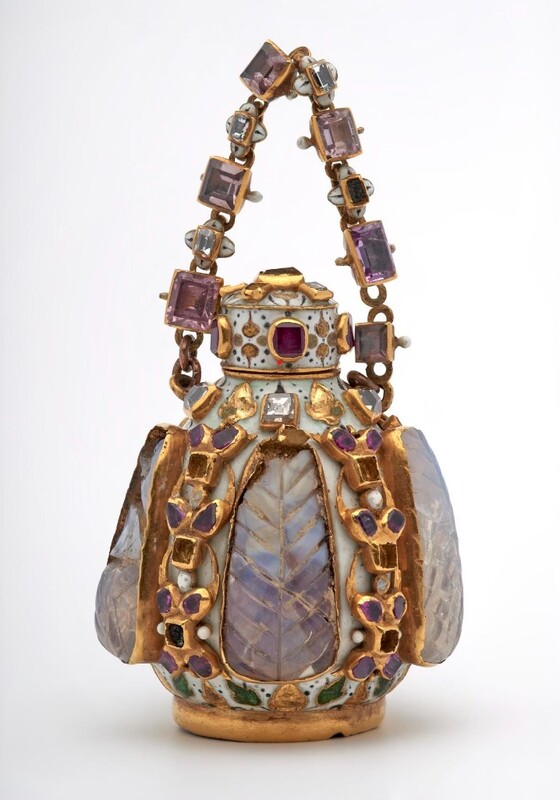
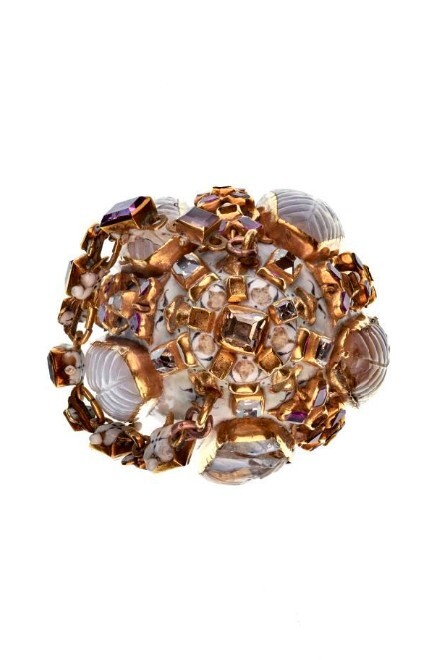
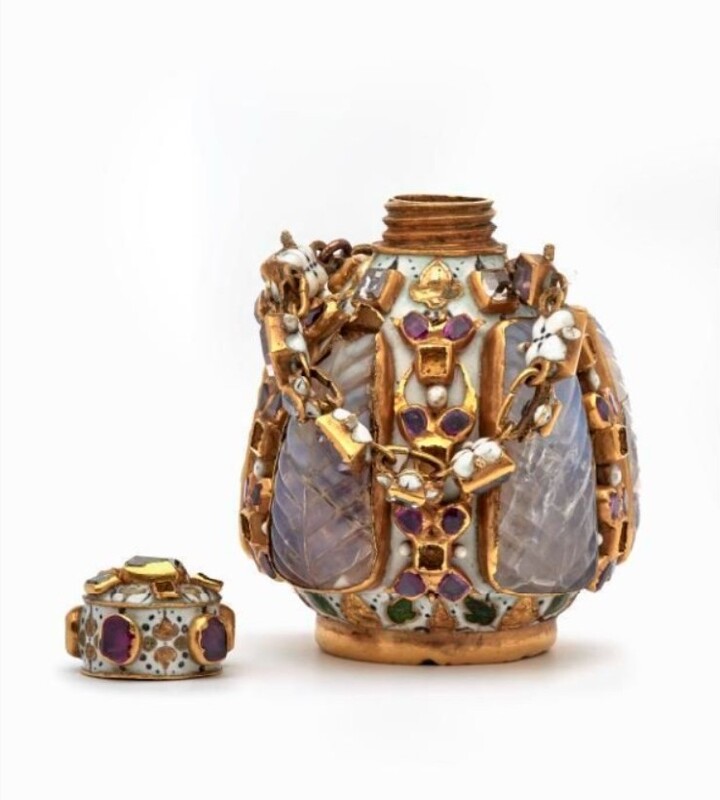
The images above and below show a tiny jeweled scent bottle that met the world by accident. In June 1912, workmen digging beneath Cheapside unknowingly uncovered hidden treasures from around the world. These treasures included a jeweled scent bottle from early modern England. This object dates to the late 16th or early 17th century, during the reigns of Queen Elizabeth I and King James I. Today, the London Museum displays it as part of a famous collection — the Cheapside Hoard.
This discovery matters because Cheapside was not reserved solely for the elite. It was a bustling, public commercial street in London. The items of the Cheapside Hoard consist of jewels from across the globe, providing evidence of international trade during the 16th and 17th centuries. Due to Cheapside's busy nature, people of different classes may have interacted and sold items to anyone who could afford to pay.
Crafted in Gold and Gems
This bottle can be easy to miss, given its small size. It measures 30 mm wide, 39 mm tall, and 59 mm with its chain attached. Its white surface dazzles with jewels: opal, chalcedony, spinel, diamond, ruby, and pink sapphire. Gold and enamel line each gem, and delicate leaf-like engravings adorn the large purple gems. Elaborate painted bulbs, dots, leaves, and leaf-like patterns cover the cap, the base, and the chain's gems.
Making an object this detailed did not happen easily. The bottle's overall weight is only 37.39 g, yet its intricate details reveal the hard labor that went into its creation. This accessory was not an everyday object; it was a luxury item. Craftsmen likely participated in the manufacturing of this bottle, including goldsmiths, gem cutters, and painters. And if these craftsmen were middle-class, they would have contributed to the rise of middle-class wealth by engaging in trades that enabled them to earn a living.
We cannot credit English-born creators alone, as immigrants were already vital to London’s trades. By the mid-eighteenth century, the work of immigrants and locals was indistinguishable in quality.
The Unknown Owner
No name, no diary entries, no portraits identify the person who once owned this bottle. However, there is something we can deduce. From this object, the intended audience of the early modern era is evident. Only the wealthy could afford such an object. Poorer individuals may have chosen something simpler and more affordable. Yet, the owner of this jeweled bottle selected the more expensive option—an eye-catching accessory.
Why This Bottle is Significant
This accessory was not a standard for all of early modern society. Instead, it proves that individuals could finally splurge on non-essential, beautiful objects. “Normal” people of the rising middle class who had earned their wealth rather than inherited it, objects like this bottle became powerful symbols. They allowed the middle class to mirror aristocratic luxury.
The bottle also reflects the artistry of both English natives and immigrants seeking work and trade. For example, skilled women from the Low Countries (Belgium, Luxembourg, and the Netherlands) manufactured stylish linen ruffs and collars. Accordingly, these women earned recognition in English plays for their craftsmanship. Their presence proves early modern England was already a deeply interconnected society.
Accessories could change appearances and social status alike. This object reveals a world where prosperity felt within reach. Ultimately, the Cheapside scent bottle proves that even a tiny object carries heavy social ambition. It remains a persistent reminder of an era of possibility.
Bibliography
Chertsey Museum. "Hair: the Styling of Society." Accessed January 25, 2026. https://web.archive.org/web/20260228154922/https://chertseymuseum.org/hair (archived version).
Lin, Erika T. "Reviewed Work: Ornamentalism: The Art of Renaissance Accessories by Bella Mirabella." Medieval & Renaissance Drama in England 26 (2013): 276–79. http://www.jstor.org/stable/24322753.
The Cheapside Hoard, 1640. London Museum. Accessed April 2, 2026. https://www.londonmuseum.org.uk/collections/london-stories/cheapside-hoard/.
Scent Bottle, ca. 1500-1700. London Museum. Accessed January 25, 2026. https://www.londonmuseum.org.uk/collections/v/object-119561/scent-bottle/.
Social History Portal. “Immigrants in London, 1500-1700.” Accessed April 8, 2026. https://socialhistoryportal.org/news/articles/110168.
Western Oregon University. “The Importance of Fashion in Early Modern England.” Accessed April 3, 2026. https://wou.omeka.net/s/repository/item/7460#lg=1&slide=0.
Art
Written by Ameerah
Portraits
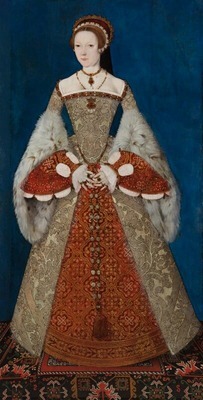
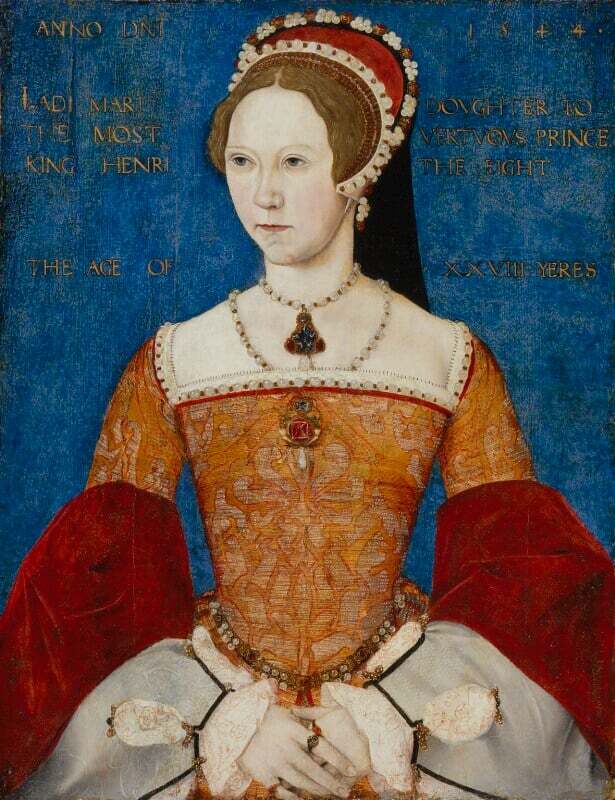
Art and the process of making art was very valuable in early modern England, especially for those of high standing such as the royal family. For example, portraiture. In the royal family, portraiture was a political act. An act which a certain queen consort was very well versed in. Katherine Parr, the 6th and last wife of Henry VIII, loved her step-daughters Elizabeth and Mary very much, although they were not her own. These two daughters were not recognized as heirs to the throne, having been declared illegitimate. In fact, the king had refused both his daughter's likeness to ever be captured in any works. This changed with his marriage with Katherine Parr. Katherine was known for her frequent commissionings. From portraits to jewelry, artists of all trades were commissioned. In her most iconic portrait, she is painted in full body, the first British queen consort to have ever been. She wears a beautiful velvet gown, with fur sleeves and jewelry hanging off the waist. She also wears a distinctive crown shaped brooch on her head. Her frequent use of portraiture to uplift and signify her status allowed for her influence over the royal family to stay strong and played a significant role in the restoration of her step-daughters to the line of succession.
Portrait Sitting
As important as portraits were, the act of sitting for portraits itself held meaning. The act of portrait sitting had become a topic of interest due to the influence of artists such as Anthony Van Dyck, his work method being described as swift. There existed what could be considered a love triangle between the sitter, painter, and third party observers. Literary depictions of portrait sittings often romanticized the act of sitting, portraying sitting as an erotic act between the painter and their subject. Portrait sitting was also an opportunity for painters to make conversation with their subjects. Engaging in conversation may put the sitter in a more natural state. This in turn would allow for the painter to capture details about the subject that make up their likeness.
Ideal Beauty
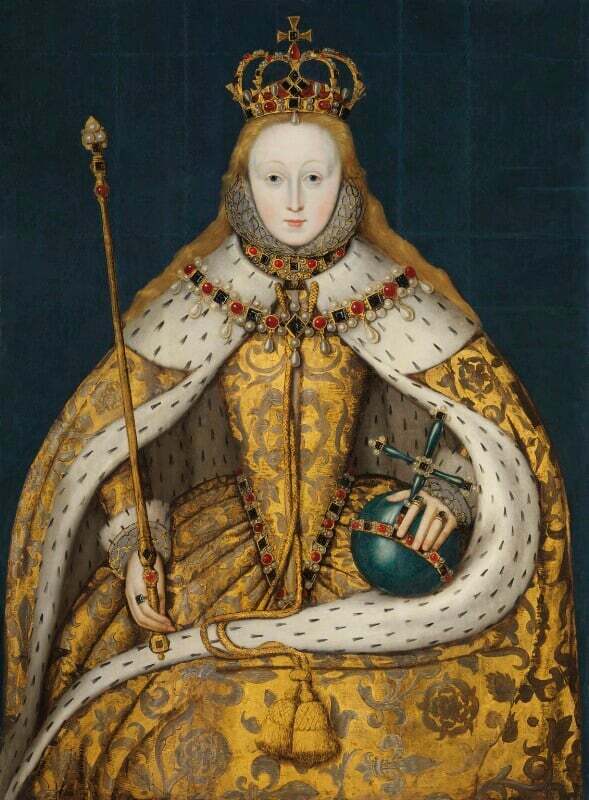
Looking at art from previous eras allows us to get an idea of the values held by the people of that time. While art was a display of power and wealth, it was also a display of beauty. The ideal beauty of the renaissance and early modern period is reflected in the art: tall forehead, smooth white skin, soft red tinted blush, and rouge on the lips. This beauty standard for female beauty was set by Italian Firenzuola, who attributed the ideal beauty with colours such as flesh pink for the lips, blonde for the hair, and black for the eyes. He believed these colours to be connected to the overall health of the body, that a healthy body will produce a harmonious beauty.
Bibliography
Eaker, Adam. "The Scene of the Sitting in Early Modern England." Art History 41, no. 4 (January 22, 2018): 650–79. https://doi.org/10.1111/1467-8365.12354.
James, Susan E. "Representing Succession: Tudor Royal Portraits, 1544-1546: Context, Production and Analysis." Cogent Arts & Humanities 12, no. 1 (2025). https://doi.org/10.1080/23311983.2025.2454116.
Katherine Parr, ca. 1545. National Portrait Gallery. Accessed April 5, 2026. https://www.npg.org.uk/collections/search/portrait/mw01957/Katherine-Parr.
Queen Elizabeth I, ca. 1600. National Portrait Gallery. Accessed April 9, 2026. https://www.npg.org.uk/collections/search/portrait/mw02070/Queen-Elizabeth-I
John, Master. Queen Mary I, 1544. National Portrait Gallery. Accessed April 7, 2026. https://www.npg.org.uk/collections/search/portrait/mw04264/Queen-Mary-I.
Sammern, Romana. "Red, White and Black: Colors of Beauty, Tints of Health and Cosmetic Materials in Early Modern English Art Writing." Early Science and Medicine 20, no. 4–6 (December 7, 2015): 397–427. https://doi.org/10.1163/15733823-02046p05.
Passion for Fashion: Dressing to Impress in Early Modern England and the Origins of the “Fit Pic”
From Ancient times clothing has played a major role in human society,from the era of cavemen with their tiger fur loincloths all the way to present day with our Gucci glasses and skinny jeans and all the time periods in between. In early modern England, what you wore was a public declaration. Between 1580 and 1600, clothing communicated rank, wealth, and social standing in ways that were legally enforced with laws that dictated who could wear silk, who could wear velvet, who had any claim to certain colors. Fashion wasn't really about personal taste. It was a controlled system for marking who you were and whether that was legitimate. This exhibit traces how people used dress, portraiture, and material goods to shape how they were perceived long before "personal branding" had a name. The evidence includes elite portraits, legal records, and court documents. Some of the most interesting are theft records: stolen silk garments that tell you a lot about who wanted access to this system and couldn't get in through legitimate means. The parallel to today's fit pic culture is real, if easy to over-explain. The urge to carefully manage how you appear to others didn't start with social media. It has a much longer paper trail.
Fashion and Social Control
Written by Fisayo Adebiyi
Under the Tudors, ordinary people were expected to wear coarse wool, linen, and dull colors. Silk, satin, and embroidered accessories were legally reserved for the elite. These weren't just social conventions, they were enforced through parliamentary legislation designed to preserve hierarchy and limit social mobility. Portraits of figures like Elizabeth I and leading nobles weren't painted for memory alone. They were political messages, communicating power and legitimacy through every detail of dress, posture, and jewel. Clothing told you where someone stood. It also told you where they were not allowed to go.
Portraiture as Performance
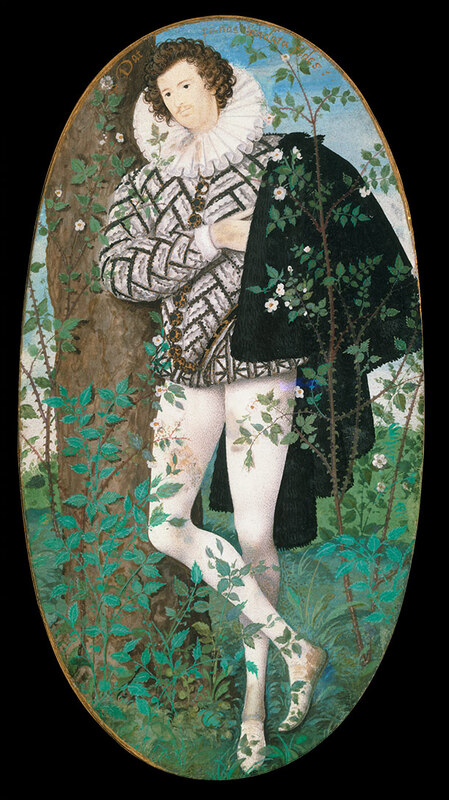
Nicholas Hilliard's portrait miniatures show how carefully the elite managed their public image. His 1587 work Young Man Among Roses is a useful example. The subject isn't simply standing there, no, he's intentionally staged. His crossed arms, tilted head, and distant expression signal melancholy, which in Renaissance culture wasn't a weakness but a deliberate mark of intellect, sensitivity, and high status. Elite men of this period used emotional vulnerability and a kind of fashionable suffering as a performance, influenced by Renaissance ideas that linked melancholy to genius and refined masculinity. To appear sad, thoughtful, and slightly detached was considered attractive , even powerful to some. It communicated that you were the kind of person who felt things deeply, who moved in intellectual circles, who was above the noise of ordinary life. The young man's pose, expression, and dress all work together to construct that identity precisely. His clothing reinforces this carefully constructed image. He wears an elaborately patterned doublet in black and white, decorated with intricate embroidery, paired with a dramatic black cloak draped over one shoulder. The large ruffled collar framing his face, which is a hallmark of elite Elizabethan dress, signals wealth and status immediately. Every garment is deliberate. Together they communicate refinement, taste, and belonging to a very specific social world. The roses surrounding him add a romantic and poetic dimension that would have been immediately legible to a contemporary audience. This wasn't a casual likeness. It was a carefully assembled argument about who he was and portrait miniatures like this one were how the elite made that argument visible.
Theft Records and the Desire for Status
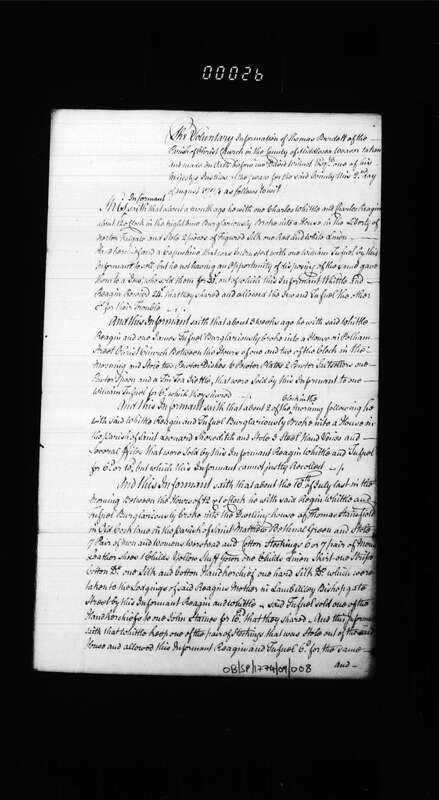
Not everyone could access elite fashion legally, which is partly why people stole it. Court records from The London Archives include accounts of stolen silk skirts, embroidered handkerchiefs, fine stockings, and decorated garments, which were items that, in Elizabethan England, carried real social weight. Stealing a silk garment wasn't just stealing fabric. It was stealing a piece of an identity that the law said you weren't entitled to wear. These records reveal something important: the desire to dress above your station was widespread, and people took serious risks to act on it. Fashion was aspiration made visible, and for those locked out of the upper ranks, it was also a vulnerability worth exploiting. People desperately felt the need to go these lengths just to have a taste of the "high-up" lifestyle, risking their freedom, their reputation and honour to present themselves as equal to those in the upper class.
The Modern "Fit Pic"
The impulse behind all of this isn't hard to recognize. Today, the carefully chosen outfit photo, or as some would call it the "fit pic," functions in much the same way as the Tudor portrait. It's a curated image, staged for an audience, designed to signal identity, status, and taste. Instagram and TikTok are new platforms, but the logic is old. You select what to show. You control the angle. You decide what the image says about you. Early modern English men and women were doing the same thing, within a much more rigid system and with much higher stakes. The difference is scale, not instinct.
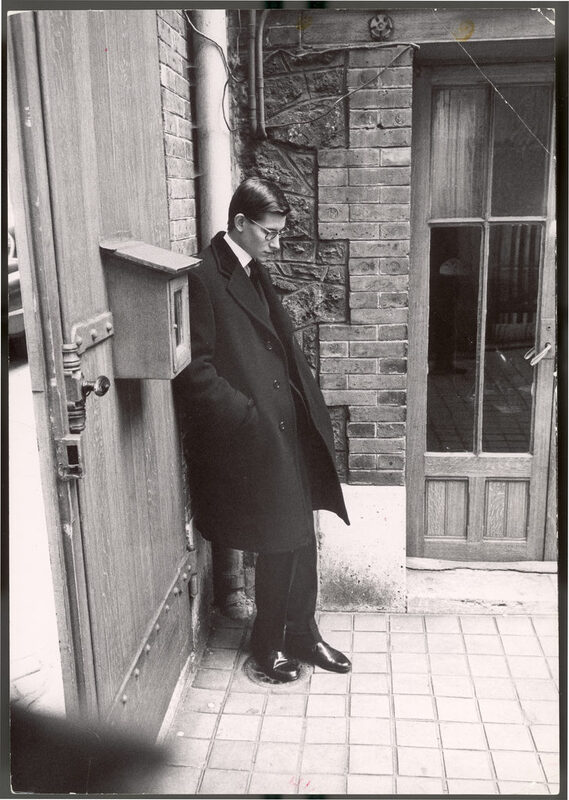
Two such examples of this are shown here. The first is Yves Saint Laurent attending the funeral of fashion giant Christian Dior. YSL exemplifies the same idea present in early modern England, showing that what we wear is a signal to others about our status, and the clothes he wore were of a quality not just anyone could access. He also echoes the Young Man Among Roses in his expression of melancholy. While it was genuinely a sad occasion, the pose was still a choice. He could have smiled in recognition of Dior's legacy living on, or adopted a different stance entirely instead he chose this one, deliberate and composed, communicating something specific about who he was and how he wanted to be seen.
Conclusion
Performative identity didn't begin with social media. It has a longer history, one thats visible in portrait miniatures, sumptuary legislation, and stolen silk skirts. Early modern England enforced the rules of self-presentation through law and art. We enforce them through likes and followers. The tools have changed. The desire to control how we are seen has not.
The second example is me, the writer. As someone who engages with fashion personally, the same principles present in early modern England are still at work. It may not be immediately visible to everyone, but the outfit was intentional. The brown sweater and beige pants were colour coordinated to blend with the surroundings, while the white shoes were chosen to flow into the pants, with cream and beige accents tying it together. The shoes themselves, Jordan 4 White Denim Levi's, worth over $1000 to the right person, carry status in the way a silk doublet once did. The hat with custom embroidery and the white durag communicate something further: individuality, a refusal to blend in entirely. Fashion is an expressive art form, and it has always been our way of presenting ourselves to the world.
Bibliography
Bochicchio, Sarah. "1580-1589." Fashion History Timeline. Accessed April 2026, https://fashionhistory.fitnyc.edu/1580-1589/.
Bochicchio, Sarah. "1590-1599," Fashion History Timeline. Accessed April 2026, https://fashionhistory.fitnyc.edu/1590-1599/.
Nicholas Hillard, Young Man among Roses, ca. 1587. "The Victoria and Albert Museum." From The Sad Boys of the Renaissance. Accessed April 10, 2026, https://www.artsy.net/article/artsy-editorial-sad-boys-renaissance.
Hunneyball, Paul. "When Tinsel Was Only for the Rich: Dressing to Impress in Early Modern England." History of Parliament Blog. Accessed April 2026, https://historyofparliament.com/2024/12/17/fashion-in-early-modern-england/.
"Old Bailey Sessions. Sessions Papers - Justices' Working Documents." London Lives, 1690-1800 (www.londonlives.org, version 3.0, Autumn 2025). Accessed April 10, 2026. Currently held: The London Archives. Available at: https://www.londonlives.org/record/LMOBPS45021PS450210026?text=skirt.
Adebiyi, Fisayo (@F_isayoo). 2025. "A wise man once said..." Instagram, March 23, 2025. https://www.instagram.com/p/DHjAcxPpBaA/?img_index=1.