Parts of the Culinary Process
Helpers of the Early Modern England Culinary Process
So much went into assisting and making up the early modern England culinary experience. For individuals in any type of culture, nation, or period of time, the cooking and eating process is cared for and done in a specific way that meets the needs of people. During the time of early modern England, many things were shifting regarding the way of life for the English people. The Protestant Reformation brought change to religion, but religion wasn’t the only thing changing. Language and culture went through change, and what resulted from that is change to the culinary practices.
When thinking of early modern England and the Protestant Reformation, recipes and cookbooks do not usually come to mind. Observing cookbooks and recipes from the time, however, grants much insight on how the little things of English life changed. The workings of cookbooks have not really changed; the makeup of cookbooks progresses and evolves as time moves on. A cookbook recipe from early pages could reveal food choices and preparation that 50 pages later may not be liked at all. Or for a fraction of a cookbook, recipes could be organized in a way that another portion of the book changes. Cookbooks act as a timeline, and in cookbooks from early modern England, that could not be any more clear. Example cookbooks and their “timeline” display so much change in English life. They begin in such cursive, almost unrecognizable by today's standards, then pages later it becomes something that more closely resembles today's time. Cookbooks will not automatically be the first thing researched and examined regarding early modern England; however, examining them reveals that little things of a time period can reveal so much more than expected.
Along with the shift in the way we use, create and interpret cookbooks, we can also find important information about early modern England and the timeline of eating utensils. Tools such as spoons and knives were booming with popularity as man could not gracefully scoop soups into their mouths nor spear large hunks of meat with their hands like they could with a spoon or a knife.
Evolutions of modern tools like the fork bring forth the smallest details of how we live now. Having the understanding of the past may allow for more appreciation in the future. Learn how forks got a place at the table and helped grow daily rituals in modern living.
Cookbooks
The Value and Purpose of Early Modern England Cookbooks
Recipes and cookbooks in Early Modern England carried much importance, maybe even more than today. In this time, recipes or cookbooks contained recipes for more than food-related things. In this time it was common to see things such as technical procedures and medical-related recipes. While the content of cookbooks has shifted from then to now, how cookbooks are treated and possessed has not changed too much. While cooking was thought to be women-led working in the household at this time, cookbooks for the most part were not; rather, they targeted whole households. Looking at cookbooks from this period of time, wear and tear is observed, as are different writing styles and, as well, witnessing the shift in writing style and, in some cases, the evolution of the type of English language. When thinking about early modern England, cookbooks are not what automatically come to mind; however, they carried much importance to understanding the lives of individuals during this time. Through cookbooks we see not just change in recipes but a shift in English culture, language, and writing style. Understanding cookbooks paves the way to understanding so much more than how to cook a certain way.
About Household and Medical Recipies
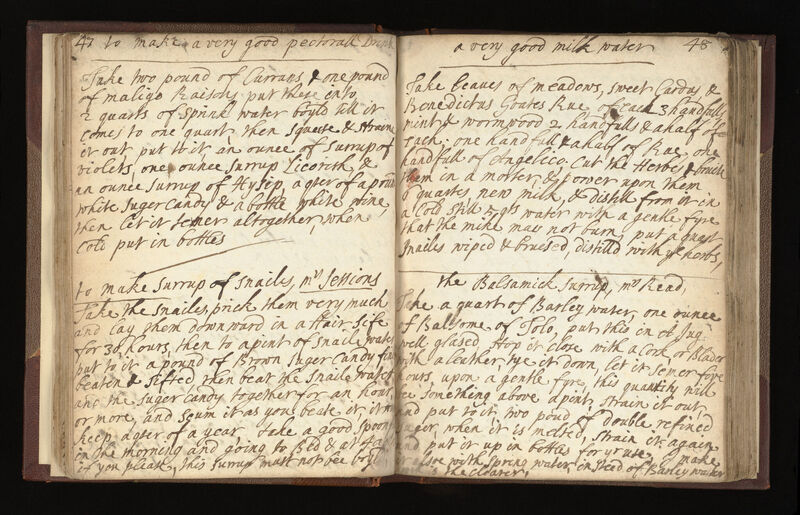
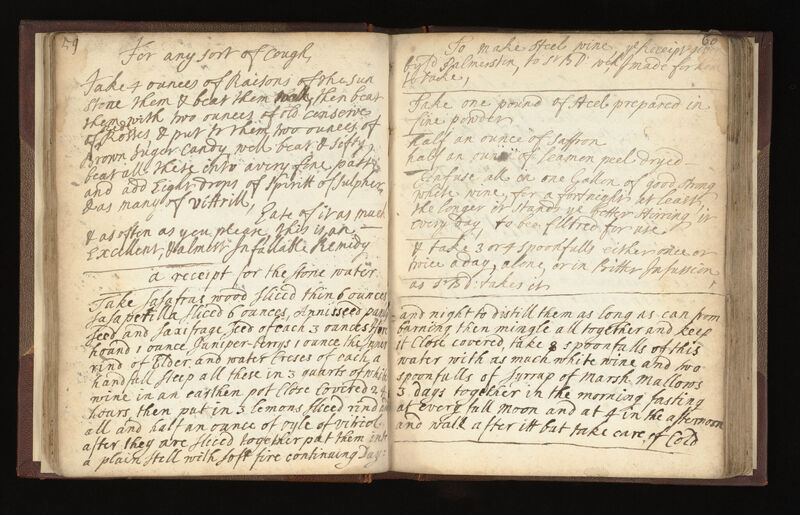
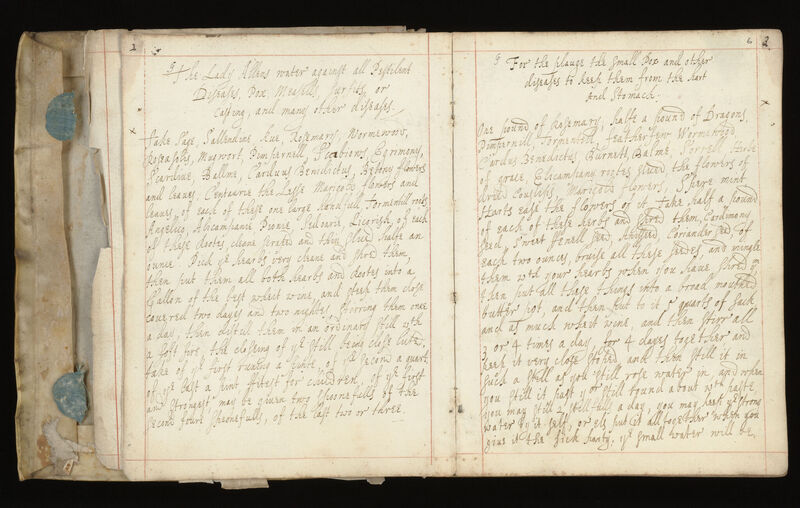
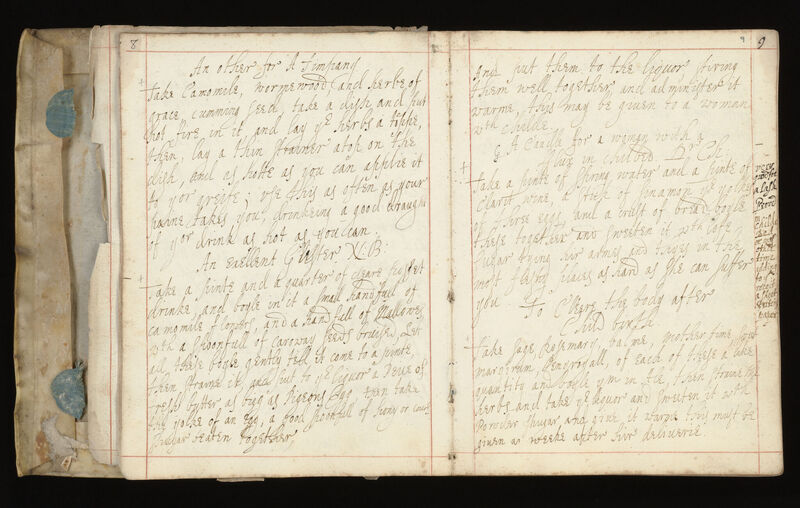
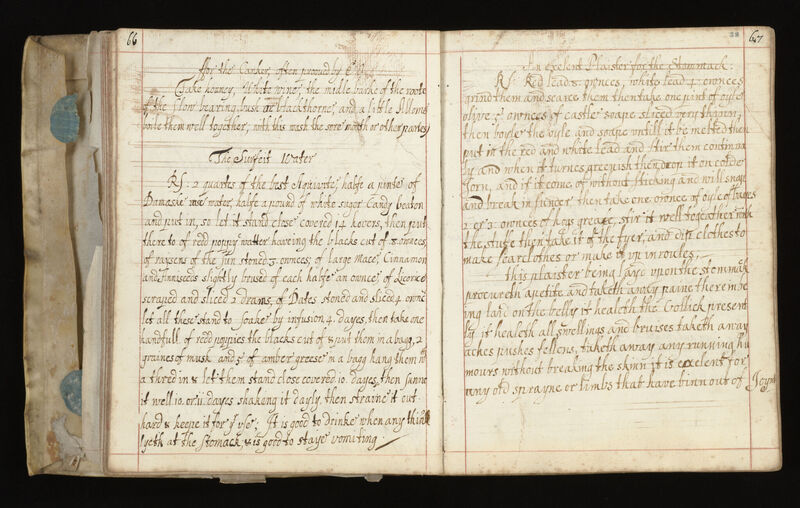
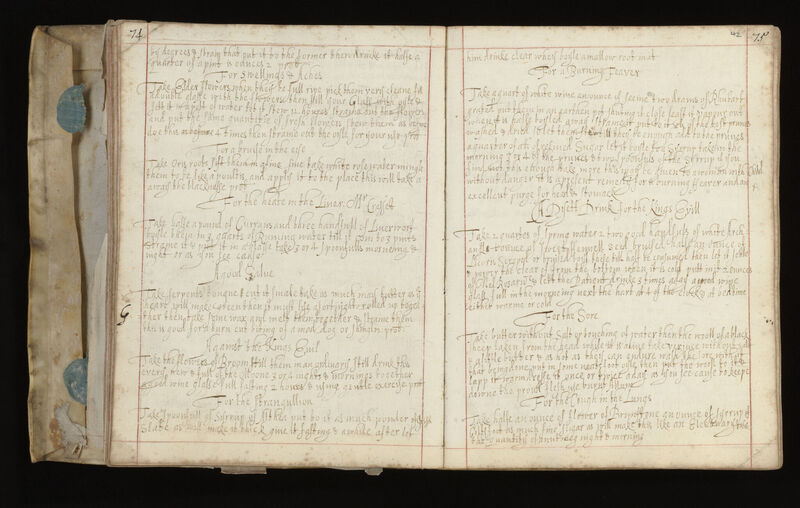
The cookbook presented goes by the title Household and Medical Recipes, from recipe observations the dates of creation lie between the estimated years of ca. 1650-1750. As it can be observed that there are different writing styles throughout the book, it can be understood that this was a cookbook that went through multiple hands and writers. Household and Medical Recipes is a cookbook with creation and ownership that is hard to track down and confirm. Wellcome Collection, the site that published this cookbook states, that reading some of the recipes and noticing recipes being designated to an "Aunt Giffard", it can be assumed that this cookbook once upon a time was in possession of Sir William Temple's (1628-1699) daughters, Elizabeth or Dorothy. Displayed to the left are example pages from the cookbook to show a physical display, as well as the progression of writing style. Important to note that pages are not in any order, and selected at random and by quality.
The Cookbook Household and Medical Recipes
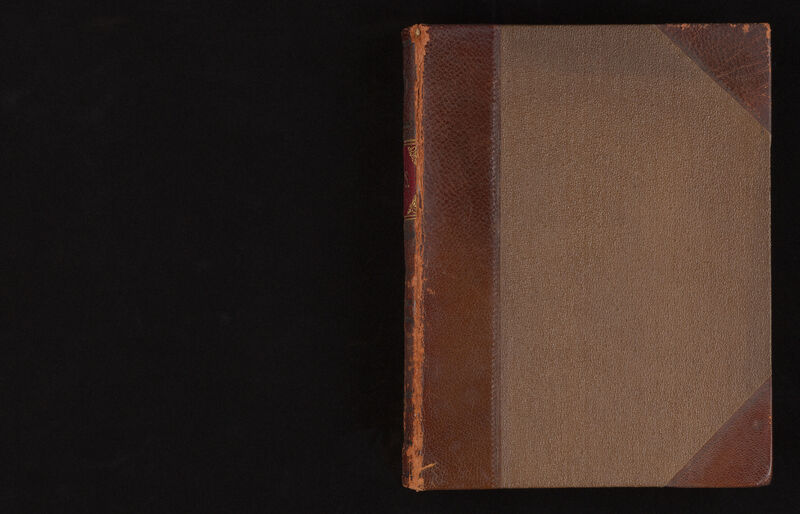
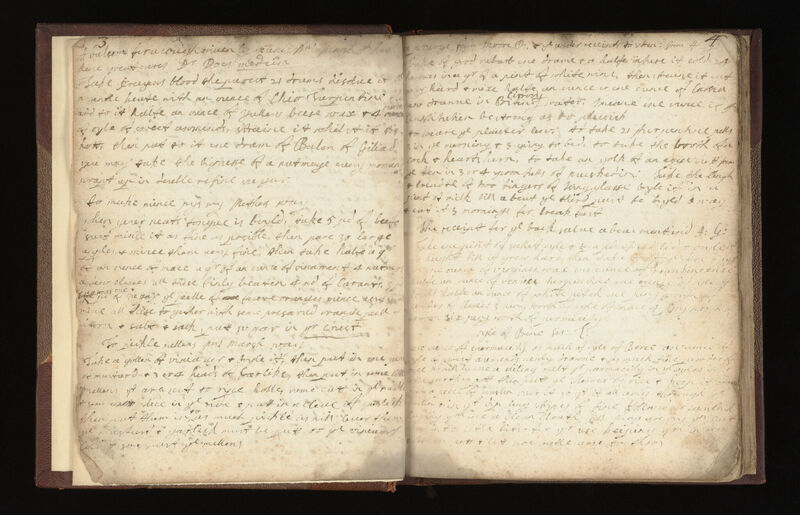
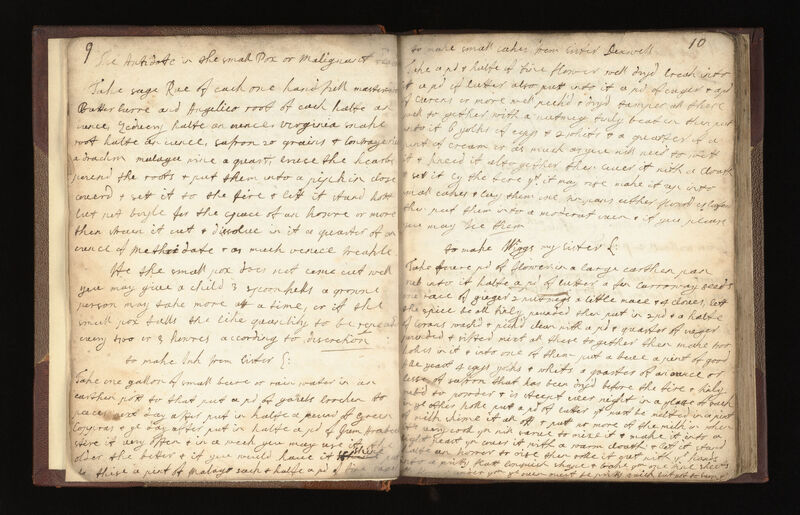
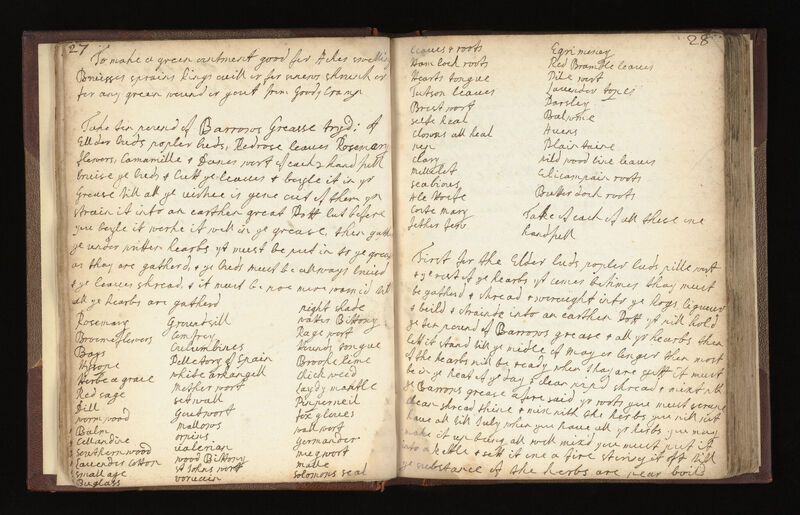
About Okeover, Elizabeth (& others)
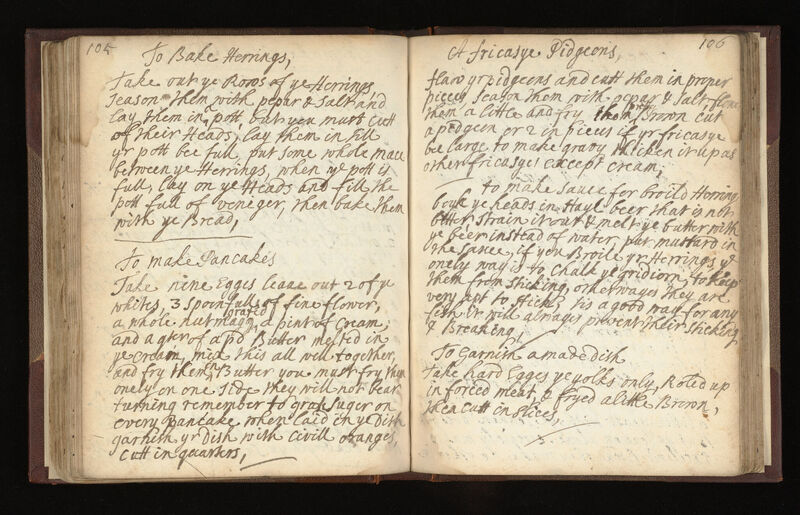
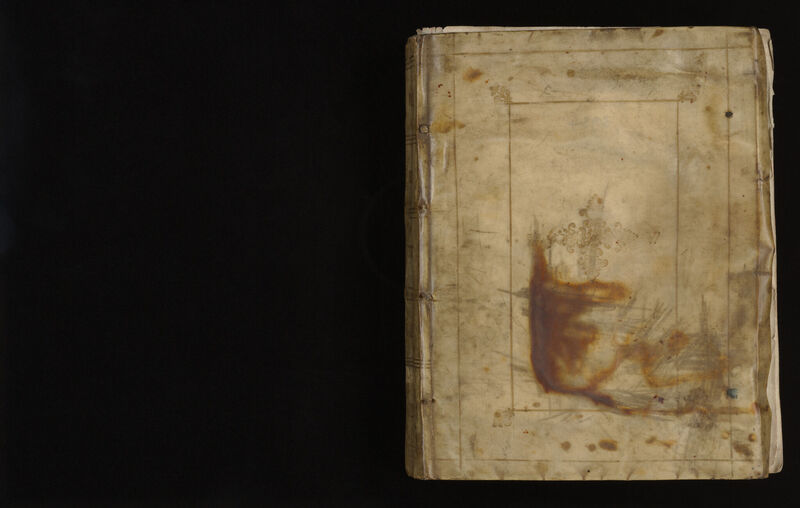
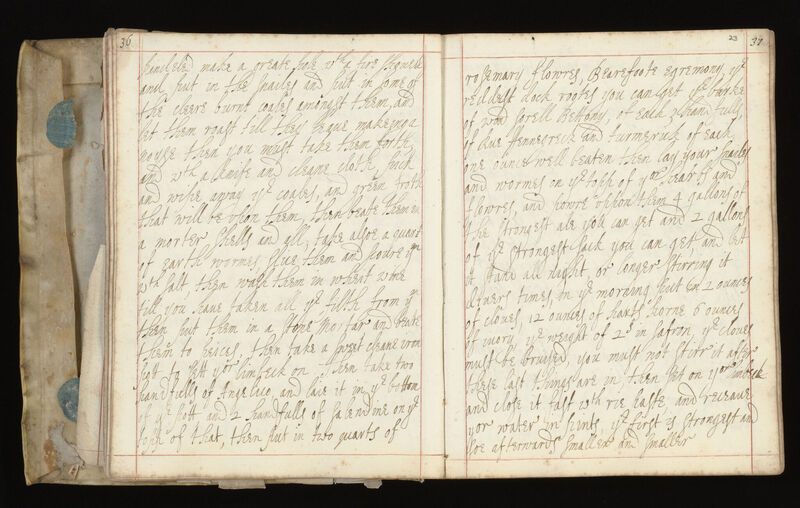
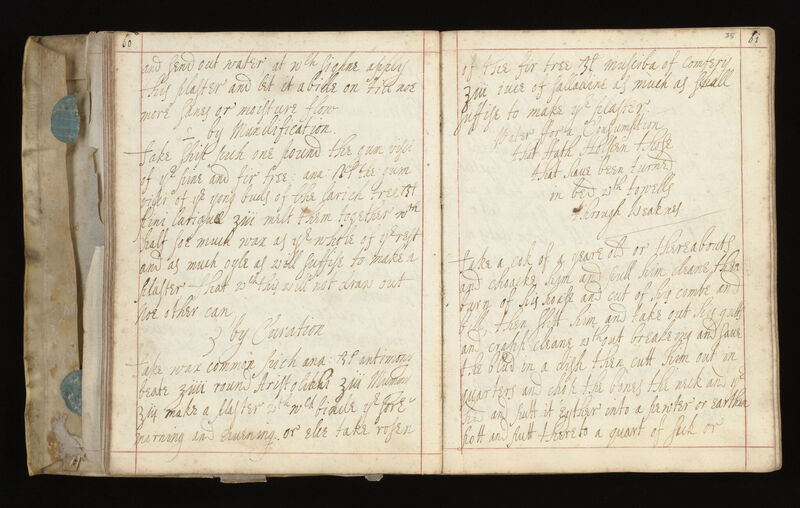
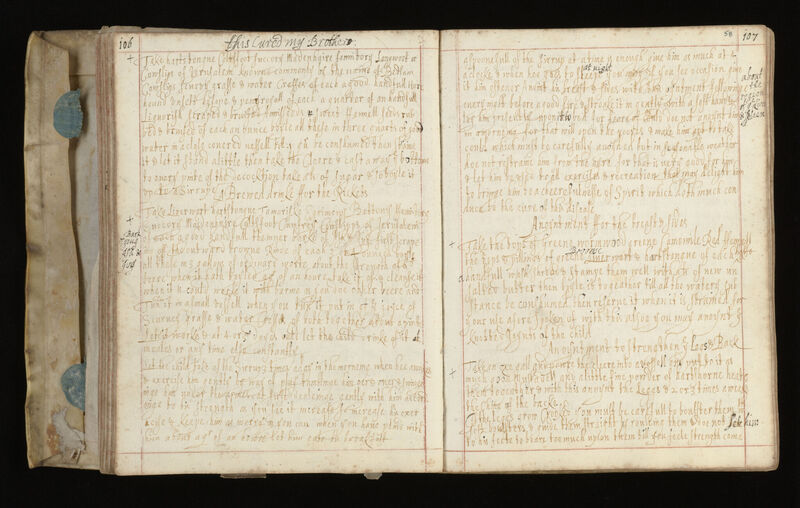
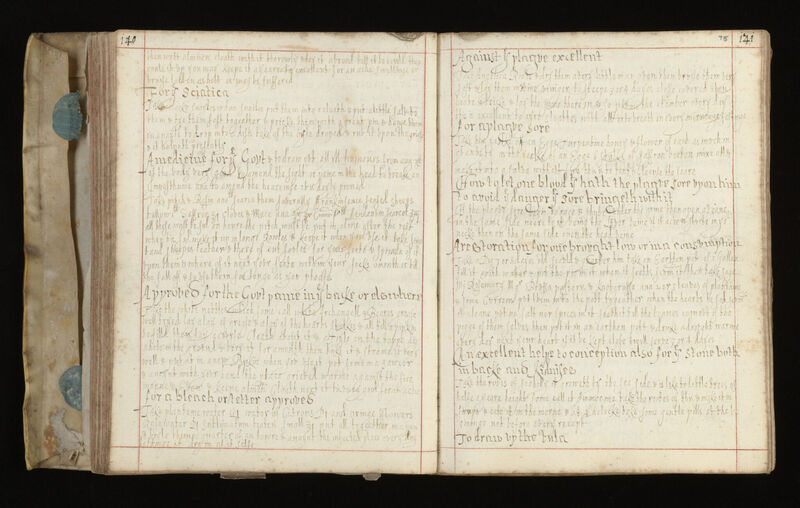
This cookbook goes by the name Okeover, Elizabeth (& others). Reason being Elizabeth Okeover was the only writer in this cookbook whos name was able to be understood. This book written around the years of ca. 1675-1725, again by multiple writters, we known about Okeover, because margin text mentions the name, as well as some recipes are signed off with initials "E.O." Wellcome Collection, believes that this text survived into after Early Modern England, and has some entries written in the 18th century. The physical condition of this book is rough, shown by the state of the books cover. This could be from just general age, but the passing to other hands and writers, who all have treated the book in their own way. Again displayed to the left are some pages from the cookbook to show a physical display, as well as the progression of writing style. It is important to note again that pages are not in any order, and selected by random and quality.
The Cookbook Okeover, Elizabeth (& others)
Bibliography
Household and Medical Recipes, ca. 1650-1750. Wellcome Collection. Accessed April 9, 2026. https://wellcomecollection.org/works/d2ckruhz.
Okeover, Elizabeth (& others), ca. 1675-1725. Wellcome Collection. Accessed April 9, 2026. https://wellcomecollection.org/works/v6k2fgmx.
Rankin, Alisha. "Recipes in Early Modern Europe," Encyclopedia of the History of Science (March 2023). Accessed April 2026. https://doi.org/10.34758/fvw2-w336.
Leong, Elaine. Recipes and Everyday Knowledge: Medicine, Science, and the Household in Early Modern England. University of Chicago Press, 2018.
Forks
Written by Victoria Rosborough
As it stands in 15th century England, dining etiquette is at a low. As the tides of Christianity are changing during the protestant reformation and meal decorum is moving with it.
What set in motion this shift of manners?
The introduction of the fork to England in 1608.
Rundown
Orignaly introduced to England from Italy in 1608 by Tomas Coryat, the fork is incresingly contraversail. The three tined design is reministante to the pitch fork of the devil so not olny was it a sign of the devil it was also impratical aginst god. People of all classes belive the use of a fork for eating would be aginst God. God would not give man hands if they were not supost to use them. Nevertheless,Upper class wemon do not want to get their hands dirty while dinning. The adoption of the sucket fork by wealthy women cast the fork in a new effeminate light. Putting up socail forces of masculity aginst men using forks.
Although theses barriers effected mens willingness to use forks. Wealthy men came to understand that the usage of forks would separate the rich and the poor, enforcing the class divide in England.
Case
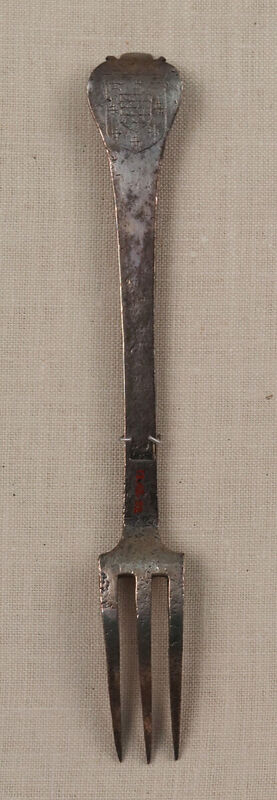
The fork pictured in Fig 1 was created by Lawrence Coles, a silversmith based in London. This fork was a commision peice for a wealthy famliy whose crest is seen at the top of the handle. Dated around 1680, this fork is a great example of a fork from the middle period of the forks introduction. Three curved tines, small build and the lower quility silver enforces the time line of the fork. The evoltution of the fork is understood in this photo as a small example of how the fork changed into what we use today.
Bibliograpy
Encyclopedia Britannica, s.v. “etiquette.” Accessed March 2026. https://www.britannica.com/topic/etiquette.
Coles, Lawrence. Fork, ca. 1680. The Metropolitan Museum of Art. Accessed March 23, 2026. https://www.metmuseum.org/art/collection/search/192226.