Gender Roles
Written by M.B.
Introduction
With the rise of discourse surrounding "traditional" gender roles, many people have turned to the early modern period to reinforce their binary conceptions of how "men" and "women" should act in accordance with what they perceive to be customary male and female behaviours. Common examples include societal expectations for men to adopt traits widely accepted as masculine, such as assertiveness, dominance, and competitiveness. In turn, women are expected to adopt traits like subservience, gentleness, and empathy. The word "traditional" is defined as something "based on a way of thinking, behaving, or doing something that has been used by people in a particular group, family, society, etc. for a long time." Most commonly, people associate tradition in reference to gender roles, with what they assume to have occurred in predominantly white societies hundreds of years ago, including the early modern period. This has led to the popularization of men and women resituating in past roles that are thought to be long-established, such as women being mothers and homemakers, and men being breadwinners and leaders. Although these traits and behaviours are thought to have occurred centuries in the past, Dr. Reinhardt Simpson has stated that gender roles commonly assigned the "traditional" label emerged and became popularized during the nineteenth century Industrial Revolution.
Although this section focuses on how early modern England challenges modernized ideas of traditional gender roles in reference to women, it is important to note that the same notion applies to men of the same period. When stereotypical conceptions of how individuals were expected to act based on their gender are considered, assumptions tend to follow the same formula; women fell into loveless marriages and lived a life of homemaking and childbearing with limited freedoms. In turn, men were awarded many liberties, expected to have minimal relationships with their families, and work until they died. While a portion of these assumptions holds some truth, women in early modern England lived vastly different lives from those assumed in contemporary discussions. A key example of this can be seen through the lens of Bess of Hardwick, a wildly successful aristocrat who artfully crafted her prosperity throughout her life. It is worth noting that, due to her socioeconomic status, Bess may not be a completely accurate representation of every woman in early modern England. Particularly those of lower status. However, from accounts given in numerous diaries and journal articles from average women of the period, it can be inferred that there was much overlap between their overall treatment and experiences. Key commonalities include a general sense of economic freedom, a lack of pressure surrounding marriage, the possibility for independence, and loving relationships with their male counterparts.
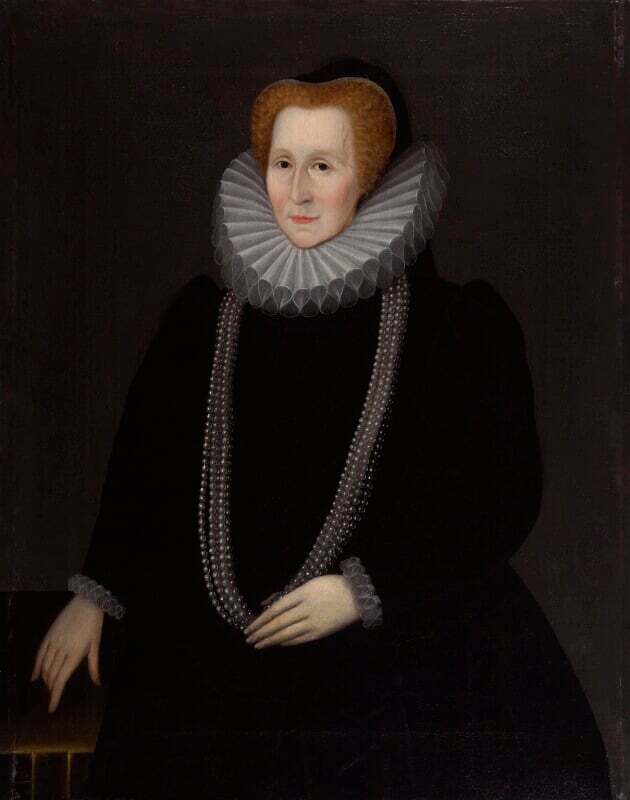
Bess of Hardwick
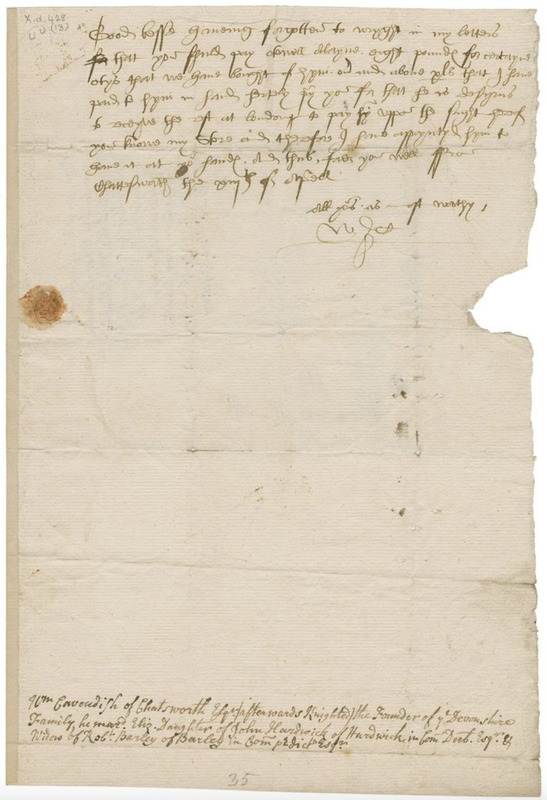
Elizabeth I, or "Bess" of Hardwick, was a wildly cunning and wealthy woman who strategically garnered an immense fortune through her several marriages. Thus leading to a life of independence and prosperity for her and her children. Born into the aristocracy in Derbyshire, England, Bess already had a social leg up, supplemented by the land her parents owned. Although marriage wasn't forced by any means, Bess still held her first union at fifteen until she was subsequently widowed a short time after. The marriage serves as an excellent example of how women in early modern England commonly had a choice in who they married if they chose to do so at all. Building on the freedoms many women had in the early modern period, women often participated in the economy both independently and alongside their husbands. Bess' swcond marriage to Sr William Cavendish provides evidence to support this claim. In the letter featured. Cavendish asks Bess to pay the bill for their oats and refers to them as "ours". The wording of this question implies that Bess had equal ownership of her and her husband's goods and serves as a real-life illustration of how women engaged in the economy.
In light of marital dynamics, women in early modern England often beat the stereotype of being "trapped" in loveless marriages and were often revered by their husbands. Bess's unions with her last three husbands serve as excellent examples of the treatment many women in early modern England received in their marriages. In many of the lovers' correspondences, both partners addressed each other with devotion. Many diary entries from women of lower status also mention similar interactions and dynamics with their husbands.
Outside of marriage, Bess challenged modern conceptions of how women of this period were expected to act and represented the majority of women in England. Following the death of her fourth and final husband, George Talbot, Bess led a life of independence and freedom, continuing to wield the power she had accumulated through her marriages and even kick-starting the creation of the infamous Hardwick Hall. The house served as a physical representation of the prestige that was crafted for the Hardwick name due to its insurmountable size and countless windows that brought forth the saying "Hardwick Hall more glass than wall." Bess' continued success highlights how women of the early modern period not only had the freedom to live independently without pressure to marry, but were also capable of competently taking on roles commonly thought to have been reserved for men. Although typical women of the perod likely would not have been able to reach Bess's level of achievement, the overarching libertes that allowed Bess to do so still applied.
Bibliography
Delval, Elizabeth. “Letters from Elizabeth Delaval to the Duke of Richmond and Lennox: Introduction”, Digital Archive, Early Modern Women Research Network, 2016. https://c21ch.newcastle.edu.au/emwrn/index.php?p=delavalletters.
English Heritage. “Bess of Hardwick.” Accessed April 1, 2026. https://www.english-heritage.org.uk/learn/histories/women-in-history/bess-of-hardwick/.
Gowing, Laura. Gender in Early Modern England. 2nd ed. Routledge, 2023.
Josselin, Ralph. The Diary of Ralph Josselin. Oxford University Press, 1976. Internet Archive. https://archive.org/details/diaryofralphjoss0000joss/page/624/mode/2up.
Reinhardt Simpson, Autumn. “Digital Exhibition Workshop.” Interview by Maya Bjur. Winter 2026.
Weisser, Olivia. Ill Composed : Sickness, Gender, and Belief in Early Modern England. Yale University Press, 2015. https://doi.org/10.12987/9780300213478.
Whittle, Jane, and Mark Hailwood. “The Gender Division of Labour in Early Modern England.” The Economic History Review 73, no. 1 (2020): 3–32. https://doi.org/10.1111/ehr.12821.
Wolfe, Heather. “Bess of Hardwick, Elizabethan Power Player.” Folger Shakespeare Library. Accessed April 1, 2026. https://www.folger.edu/blogs/shakespeare-and-beyond/bess-of-hardwick-elizabethan-power-player/.