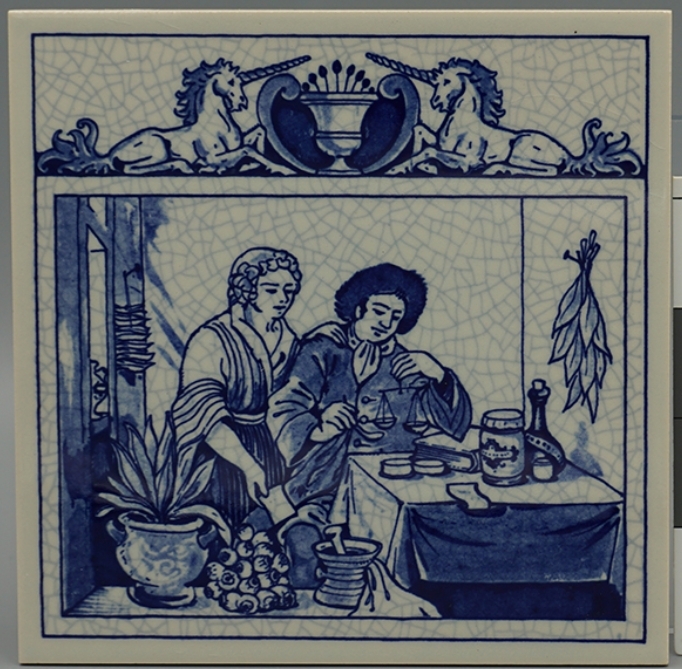
Health & Medicine
The early modern period in Europe was a time of significant change in how health and medicine were understood and practiced. There were prominent shifts in household and commercial medicine, in the remedies used, and in how knowledge was transferred throughout communities. This was a significant period for the formalization of medical and herbal practices in written texts, shaping much of the medical knowledge that circulated throughout different audiences. This era was also known for the spread of new deadly diseases and an urgency to find methods of treatment and prevention. Many factors influenced medical practice, including politics, gender roles, and religion, showing that health was influenced just as much by society and culture as by medicine.
A variety of historical sources from the early modern period reveal how health was viewed and treated at the time. Herbals and medical books were produced and spread among different communities, illustrating different medicinal plants and their individual healing properties. Along with this, there are records from churches and diaries describing prayers and rituals for different illnesses. These records provide further insight into how medicine was perceived and influenced by the Church at the time. Many artisans in this era created artwork to depict common medical practices and symbolize their connection to cultural and religious life. These primary sources show that health and medicine were deeply embedded and influenced by culture and society.
By analyzing multiple primary sources from the early modern period, this exhibit explores a variety of aspects of medicine and health by examining the people, beliefs, medicines, and diseases that shaped everyday medical practice. A primary area of discussion is the role of women in healing positions and the biases and gender boundaries they faced at the time. Women’s knowledge of remedies formed the foundation of medical care within the household, even though this work was often overlooked by medical authorities. This exhibit then explores the influence of the Church and the effects its teachings had on healing and medicine. The Church influenced ideas about healing and medicine far more deeply than is often assumed. This exhibit also highlights the importance of herbal knowledge, focusing on the uses and properties of rosemary and how this knowledge was passed down through generations. Herbs like rosemary were valued not only for their medicinal properties but also for their use in everyday treatment and trade. Finally, this exhibit examines the widespread outbreak of syphilis and the immense impact it had on understandings of health and morality in early modern society. Together, these topics demonstrate how health and medicine in early modern Europe was shaped by a variety of cultural and societal factors.
Christianity’s involvement in Early Modern Medicine
Written by K.K.
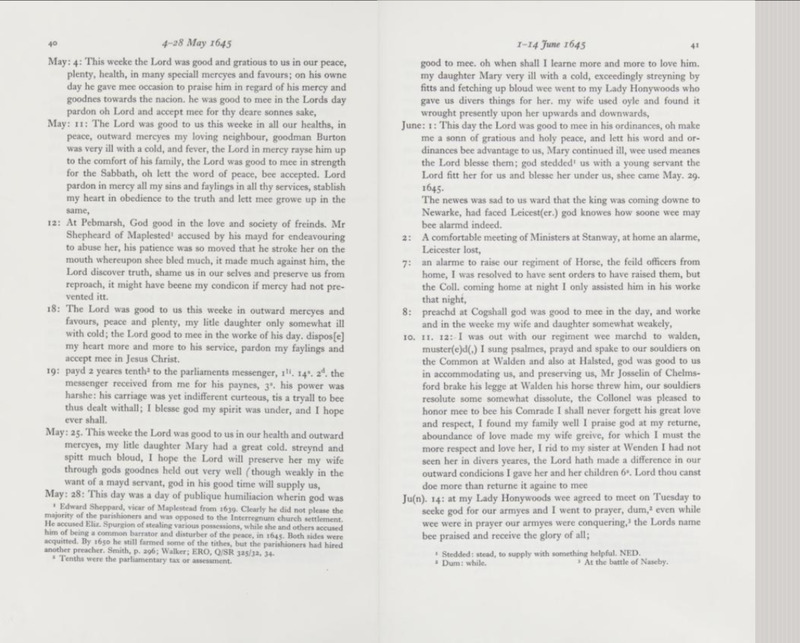
The diary of Ralph Josselin provides a vivid window into the inseparable relationship between Christianity and medicine in early modern England. Throughout my studies, I have found that Christian belief was so deeply integrated into medical culture that it acted as one of its primary influences. Josselin’s writings demonstrate that the medical crises of the time were not seen as merely biological events, but as profound spiritual trials. For Josselin and various others, Christianity provided the primary framework for understanding the cause, experience, and the cure of illness.
The most prominent theme in Josselin’s diary regarding medicine is the concept of “Providence”. He viewed every ailment as a direct expression of God’s will, reflecting an early modern worldview where disease was interpreted as divine visitation which was intended to either be a punishment or a test of faith.This ideology was quite common at the time where many people believed that falling ill was considered a matter of spiritual warfare, and recovery required prevailing through faith and prayer. This belief is highlighted when Josselin fell ill and instead of viewing it as a secular cause, he engaged in a rigorous self examination to determine why God might be punishing him. Under this lens, a spiritual diagnosis was seen just as vital as the physical diagnosis.
This perspective rooted the medical world in religious ritual. While practitioners still employed herbs, plasters, and bloodletting, these methods were often considered as secondary practices to spiritual intervention. Prayer and fasting were seen as the primary solutions for any ailment, as it was believed that the efficiency of a drug or treatment depended upon God’s blessing. Without this divine sanction, even the most skilled physicians were considered powerless, creating a dual layered approach making physicians and church leaders having to consult in tandem.
Furthermore, the diary also illustrates how Christianity managed the emotional toll of the illness. In a period of high mortality rate, the idea of “Providence” became a necessary coping mechanism, providing reason for the tragedies people endured. The promise in a purposeful afterlife offered comfort to many in such difficult times. While medicine provided the tools to attempt a cure, Christianity provided meaning behind the suffering. Christianity provided a sense of community during hardships. It was often recorded that through times of medical struggle neighbours and friends would come together to pray for the sick. This allows us to see that healthcare was seen as a shared religious duty. For treatments to work there had to be a strong underlying sense of faith and community. I believe that the community and comfort provided is what made religion such a vital tool within developing medicine.
Therefore, Ralph Josselin’s diary directly reveals that in early modern England, Christianity and medicine were not considered separate entities but a singular cohesive framework. By correlating biological ailments with spiritual trials, it reveals a profound sense of scientific development rooted in humanity's sense of faith. This demonstrates that religion was a foundational force that shaped the evolution of medicine into the practice we experience today.
Bibliography
Josselin. Ralph. The Diary of Ralph Josselin. 1616-1683, ed. Alan Macfarlane. Oxford University, 1976. Accessed March 31, 2026. Internet Archive https://archive.org/details/diaryofralphjoss0000joss.
Women, Medicine, and Print
Written by M.B.
Gender boundaries shaped medical practice in early modern England, often downplaying women's significant contributions to the field. Although historical texts usually highlight male physicians in formal medical settings, women did have very successful roles in both commercial and household medicine. In the 1700s and 1800s in England, medicine was shifting away from household remedies toward more professional practices that required formal education and training. This transition required materials that could be used to study and inform those practicing this type of medicine at the time, such as herbals.
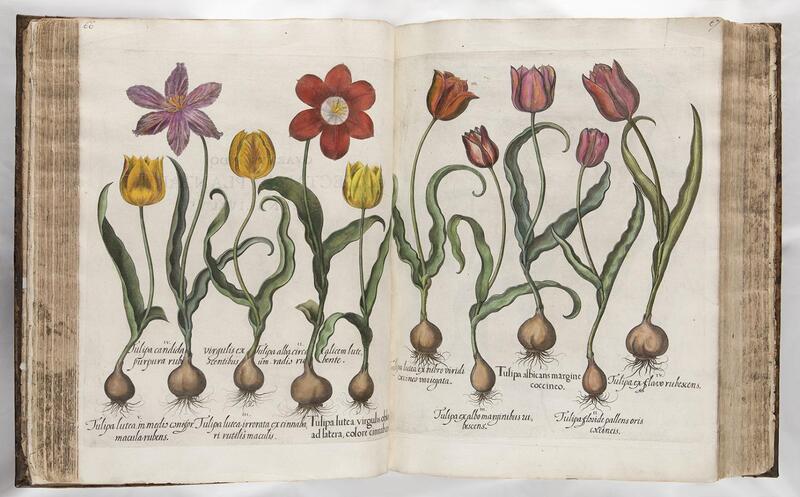
The early modern period was a significant period for the formalization of medical and herbal practices in written texts. Herbals were books filled with information and images, often from engravings of real specimens, hand-coloured after printing. They served as early tools for formalizing medical and botanical information. The invention of the printing press in the mid-15th century made this knowledge more widely accessible through textual sources rather than oral teachings. Their scientific tone did make it primarily targeted towards wealthy men seeking further education. While this did reinforce gender boundaries, it was worked around by women who didn't fail to consume and apply medical knowledge like this.
Women pursued medical work in domestic settings during this period and had widespread methods for acquiring and sharing their knowledge. Books, while not the only source of knowledge, were extensively studied for a thorough understanding of many remedies. There were books directed towards women and medical knowledge, often grouped together in one inclusive text along with other household duties, but herbals were popular as aswell among those who could afford them. Their work was supported by established networks of female knowledge-sharing, particularly in neighbourhood settings. They didn't just share what they were reading, they shared detailed notes and annotations of the knowledge they had gained, which were more personalized than just citing the book. After these personal notes were made, it is suggested that the women had no intention of returning to the printed copy, as they already had everything they needed to know, in a form coherent to them, written down.
The shift towards herbal texts was towards the end of the early modern period, and consisted of a variety of books being published in this area. This was made possible not only by the popularity of the printing press but also by the growing need for medical texts for institutions and household users. While professional physicians were often men, women played crucial roles in midwifery, domestic medicine, and other areas that are minimized in this text through the use of more scientific and formal tones that could be properly understood only by wealthier men who could afford a medical education. Because of biases like this, females and ordinary families at the time were excluded from this source. This unfortunate lack of information about women's crucial roles in medicine is passed down through knowledge of medical history until much later.
Bibliography
Fissell, Mary E. “Introduction: Women, Health, and Healing in Early Modern Europe.” Bulletin of the History of Medicine 82, no. 1 (2008): 1–17.
Leong, Elaine. “‘Herbals She Peruseth’: Reading Medicine in Early Modern England.” Renaissance Studies 28, no. 4 (2014): 556–78.
Leong, Elaine. “Making Medicines in the Early Modern Household.” Bulletin of the History of Medicine 82, no. 1 (2008): 145–68.
“Seeds of Knowledge: Early Modern Illustrated Herbals. The Morgan Library & Museum. https://www.themorgan.org/exhibitions/seeds-of-knowledge.
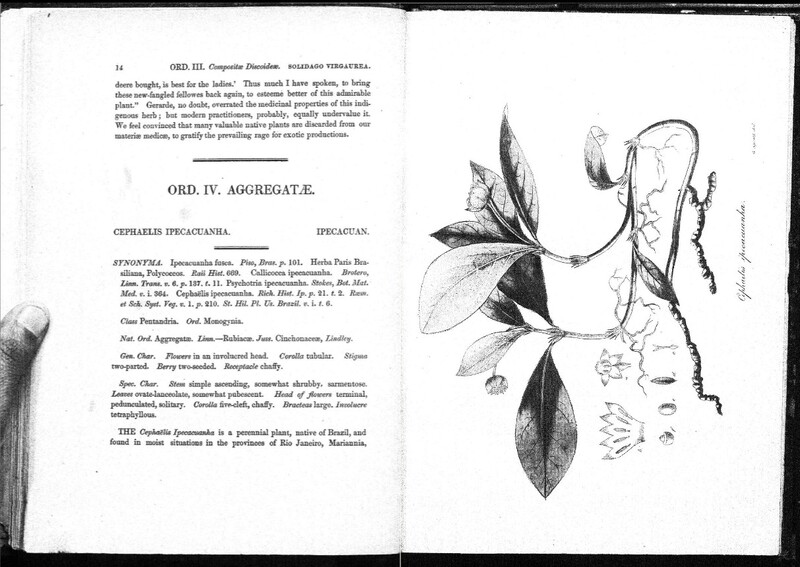
Woodville, William. Medical Botany, Volume V, 1832. Internet Archive. Accessed April 8, 2026. https://archive.org/details/in.ernet.dli.2015.271295.
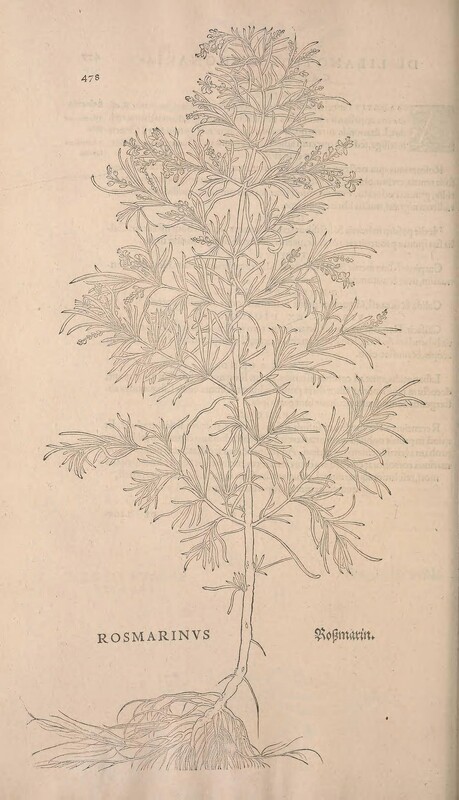
Rosemary
Written by D.Z.
Everyday uses
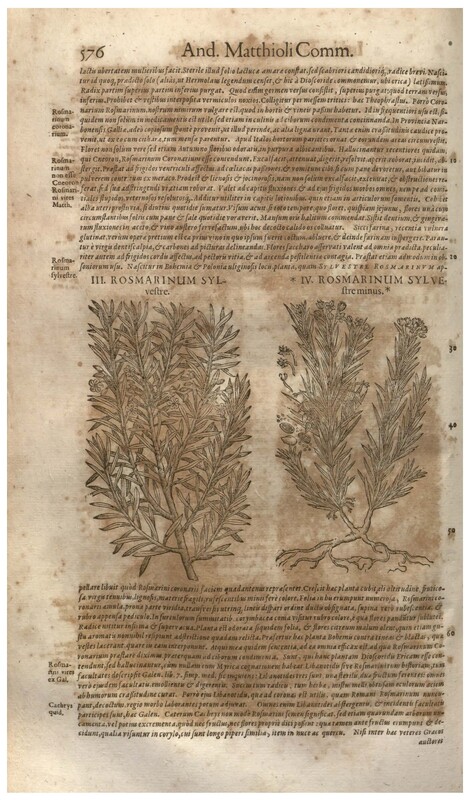
Examines the rosemary herb for physical purposes. The use for diseases including the head, stomach, liver and belly. The decoction of rosemary wine helps the distillations of rheum into the eyes including the head the brain among other ailments. It helps a weak memory and quicken the senses. It is a quick remedy for ailments in the stomach, bowels and spleen, expelling it powerfully. To create good air in your home or chamber the use of burning rosemary. Put in a pipe like tobacco helps those who had a cough or consumption. Leaves used in bathing made into oil also helps old benumbed joints and sinew. The chemical oil drawn from leaves and flowers used in the practice of touching temples and inhaling the nostrils. The dosage given to the patients was minimal and only administered with discretion. The oil is very powerful. The recipe for rosemary oil is to put the leaves in a strong glass closed stopped, tie a fine linen cloth over the mouth and turn the mouth down into another strong glass, and sit in the sun the oil will distill down into the lower glass to be preserved.
Christianity
Rosemary was once said to have been one of the herbs that lined the manager in which Jesus was born. The evergreen shrub was once called ‘Rose of Mary’ because of the color of their flowers. In Early Modern England 1500-1700 rosemary herb was used in funerals signifying the souls immortality. Mourners would carry a sprig of rosemary to the grave and throw it down onto the coffin. Rosemary is associated with death as early as the seventeen century, A symbol of resurrection because a withered rosemary herb tree has the capability of reviving from its roots. The clergy would adorn their shroud to sticke and deske forth the bodies of the dead. In Early Modern England 1500-1700 the clergy washed and anointed the deceased with rosemary herb water, rosemary herb was burned close to the deceased to dispel the bad smell of the deceased before putting them down in the ground.
Trade
Many spices were believed to have medicinal value . First to purge the body then leading to a healthy body, Rosemary has economic, social and environmental benefits. The economical points of a rosemary herb is it’s leaves (fresh or dry) flower twigs and essential oil. Cultivation and wild harvesting of rosemary mostly used for the needle like leaves. It is popular because of its accessibility and is extremely useful to cure all ailments. It is easy to cultivate and the leaves are in high demand not only medicinal but culinary, essential oils and other daily usage. For the rich and nobility rosemary was in high demand and they had the first pick of the herb. The elite ate meat with rosemary leaves while the poor only ate grains. There was an economic boost in Early Modern England 1500-1700 and the sale of rosemary shrubs were in high demand. It was profitable to cultivate and sell the different rosemary products.
Bibliography
Banjaw, Dejene Tadesse and Habtamu Gudisa Megersa, Damtew Abewoy, and Dadi Tolessa Lema. "Rosemary Recent Classification, Plant Characteristics, Economic Parts, Marketing, Uses, Chemical Composition, and Cultivation". International Journal of Scientific Research and Engineering Development 7, no. 1 (2024): 157-165.
Culpeper, Nicolas. Culpeper's Complete Herbal. J. Gleave, 1826. https://wellcomecollection.org/works/y753zzup.
Drury, Susan. “Funeral Plants and Flowers in England: Some Examples.” Folklore 105, nos. 1–2 (1994): 101–3. https://doi.org/10.1080/0015587X.1994.9715881.
The Immense Impact of Syphilis
In the late fifteenth and sixteenth centuries, a new and terrifying disease swept across Europe: syphilis. The widespread syphilis epidemic in early modern Europe did more than introduce a new disease—it transformed how people thought about health, morality, sexuality, and public order. The disease rapidly spread through cities, armies, and social hierarchies, and syphilis became one of the most visible and feared illnesses across all social classes of early modern Europe. Its reach made syphilis impossible to ignore and forced European societies to confront the social consequences of a widespread health crisis.
Because syphilis was primarily transmitted through sexual contact, it quickly became associated with immorality, sin, and shame. Communities often blamed specific groups for spreading the disease, including soldiers, the poor, and women accused of promiscuity. The disease was given different names such as the “French disease” or “venereal disease,” displaying how little was known about the disease’s origin or symptoms at the time. The epidemic also changed public behavior and attitudes toward sexuality, particularly blaming women and their promiscuity and being suspicious of their sexual relations. Churches strongly preached against promiscuity, framing the disease as divine punishment for sinful behavior. Syphilis and health therefore became closely linked to ideas of moral discipline.
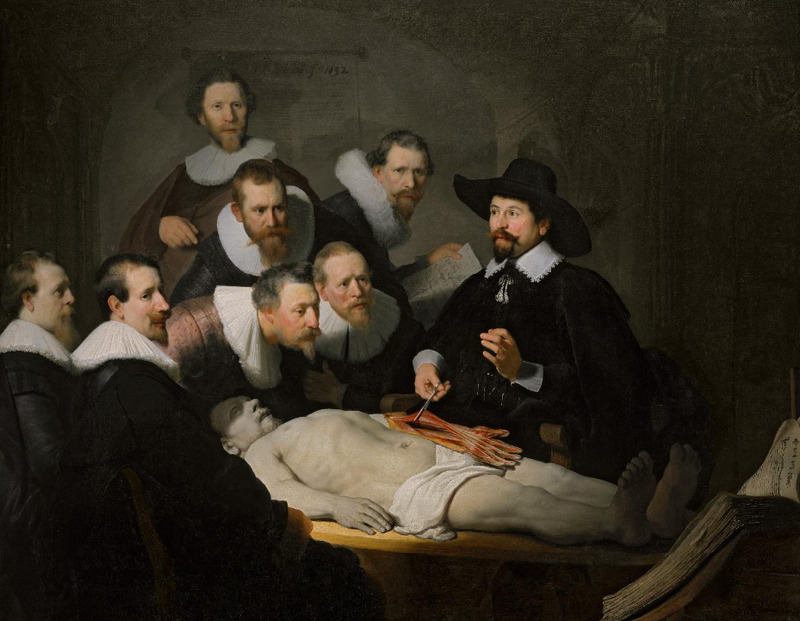
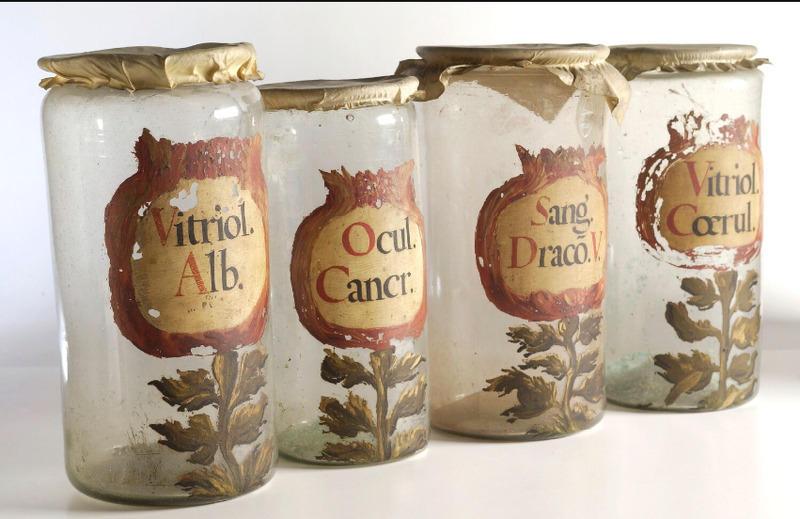
Hospitals experienced a sharp increase in patients suffering from syphilis, placing strain on early modern healthcare systems. Treatments at the time were mostly based on medieval and spiritual tradition, resulting in inconsistency and confusion on how to treat syphilis. Treatments such as mercury, herbal apothecaries, sweating and bloodletting were often painful and dangerous remedies for the disease. The failure of these treatments created urgency to address the epidemic and pushed physicians and the academic community to better understand preventative measures. Anatomists such as Dr. Nicholaes Tulup and Gabrielle Fallopio greatly contributed to shaping medical knowledge as we know today. Their published observations helped spread medical knowledge on a bigger stage in an academic setting.
Ultimately, the syphilis epidemic reshaped early modern European society by intertwining health with morality, social attitudes, and public policy. It forced communities to think differently about disease transmission and prevention. More than a medical crisis, syphilis became a social phenomenon that influenced religious teachings, public stigma, and attitudes toward the human body. Its legacy shows how a health crisis can alter not only medical practices but the very structure of society.
Bibliography
Burroughs, Wellcome & Co. “The Herbalist.” American Institute of the History of Pharmacy Digital Collection. Omeka. Accessed March 27, 2026. https://aihp.omeka.net/items/show/181.