Death
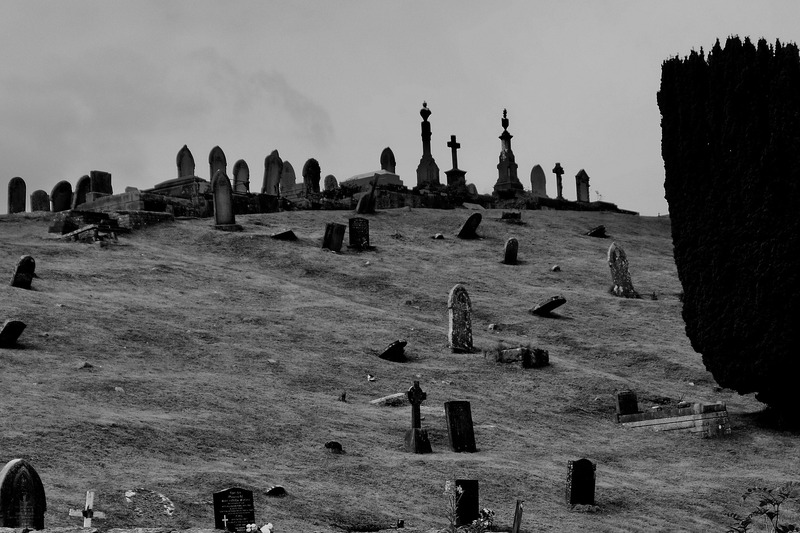
Introduction
Death in Early Modern England is important to examine because it offers insight into the rituals and beliefs of the time and shapes how people lived their lives.
Death is an overarching idea in all societies because it's something we all come into contact with eventually, and inevitably will be our end. One can choose to hide from it or face it; either way, it will come. The idea that we will die, known as memento mori, shapes how we live, recognizing that life is fleeting and singular. Early Modern English people seemed to align with this idea. Death was much more public in the Early Modern period than it is today. There is a misconception that the openness of death was due solely to the sheer volume of deaths. Some common causes of death were infections, disease, and malnutrition. Diseases like smallpox or tuberculosis caused a great number of deaths in Early Modern England. Deaths caused by infection were due to poor sanitary practices with wounds, childbirth, and surgeries. The short average lifespan of around 40 years was in part due to the high level of stillbirths, as well as child mortality, that occurred from 1500 to 1699. So people weren't just dropping like flies; the openness was for a more social reason.
People at this time were encouraged to take their time with their process of grief and were often joined by members of their community or parish. Today, it's very typical that people going through intense loss are left alone and given space, or engage in activities to distract from the uncomfortable feelings. But due to the public nature of grief, early modern English people would often experience loss together in a more connected way. In fact, funerals were large communal events with extravagant gift-giving to display social standing and honour. People would attend funerals out of respect, even if they did not have a good relationship with the deceased or did not know them well. Since the whole community was so involved in deaths in the community, word also got around if the way someone died was undesirable.
Ars Moriendi, meaning the art of dying, detailed what was considered a good or bad death. Dying a good death meant dying at an old age, but not so old that you lost your mental and physical faculties. Dying with little pain and at peace with the world and the fact of death. You had to have set your affairs in order and take leave of your loved ones. You had to leave behind a good reputation and name. It also rarely involved spiritual aspects to have a good death. It did not matter your level of spirituality, just that you followed the previously mentioned criteria of a good death. Your emotional state regarding death held more significance than your spiritual relationship with death. You have to accept that your own death is near and prepare for your own death. Sudden and unexpected deaths were bad, as they gave you no time to prepare, and they meant that you could not say goodbye to your family.
We dive into two facets of death in this period: the topic of autoposies and the topic of suicide.
Suicide
Written by B.M.
Terminology
The term “self-killing” was more common terminology of the time, rather than “suicide”. Other commonly used terms include “self-murder” and “felo-de-se,” meaning “felon of themself.” Concerning the topic of suicide, the commiter of the act is both the victim and the perpetrator. Compared to contemporary times, these terms point to greater emphasis on the act of murder committed rather than on the victimization of the individual. This is why people are considered felons rather than victims of themselves.
Societal Attitudes & Superstition
Religious devotion and belief in God were a deeply integral part of life, and suicide was so blasphemous because it was seen as the ultimate sin. In a similar fashion to witchcraft, suicide was seen to be an action brought upon by the devil; there was no consideration of mental health or personal struggle.
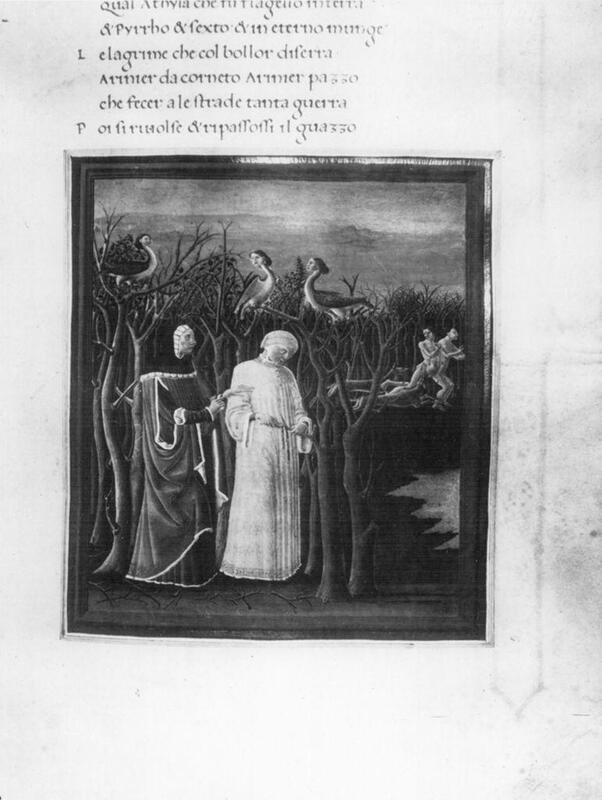
This print depicts the seventh circle of hell in Dante's Inferno. Dante’s Inferno aligns with the Catholic perspective prior to the Protestant Reformation in Early Modern England. According to the story, the second ring of the seventh circle of hell, known as the woods of suicide, is reserved specifically for suicide. It is depicted as a dark and treacherous place, which reflects what the people of the time viewed as an equal punishment in the afterlife for the act of committing suicide.
Crime & Punishment
People who had committed suicide would not be given the honour of a Christian burial, rather their body would be disposed of in ways to attempt to punish the soul. The deceased would have a stake struck through the heart or buried at a crossroads or in filled tunnels to condemn their soul to wander lost for eternity. Not only would the physical body be punished, but the property of the deceased was also targeted. The deceased’s belongings would be confiscated by the crown or burned. If the deceased had debts to pay, the responsibility of paying would be transferred to the living family members.
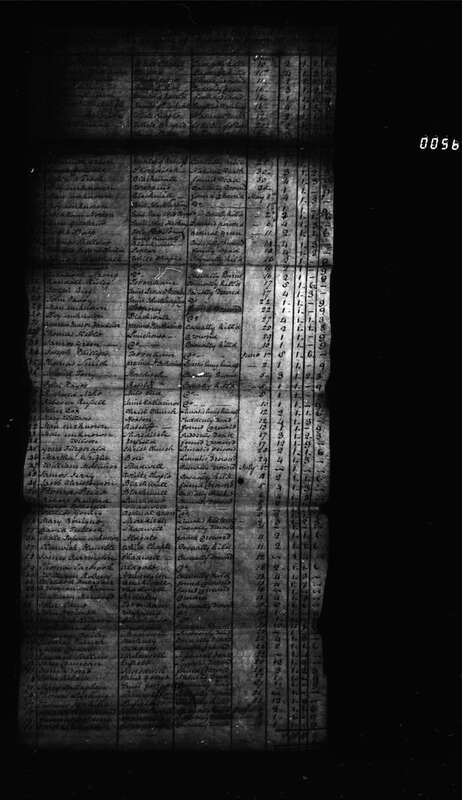
The source presented is a manuscript record of suspicious deaths from Coroners’ Inquests. The people listed under the numbers 6, 20, 35, 40, and 54 would all be examples of suicide, although described in many different ways. Worth noting is the terminology “lunatic hung himself” in row 35 and “casually kill’d” in row 1. “Lunatic" was a term at the time for mental illness and its connection to the phases of the moon, stemming from the root word “luna,” meaning moon, and “casually” is used to mean by accident. This primary source provides insight into the language used at the time and views that attribute abnormal behaviour to external forces such as the moon and witchcraft. People who may be left out of this source would be individuals who committed suicide, but the deceased’s family successfully covered up their death. Additionally, some groups were generally recorded less diligently, such as stillbirths, the poor and vagabonds, and individual deaths lost alongside large volumes of death. We can infer from this source that the general views on death at the time did not consider mental health and psychological well-being as factors of suicide.
Motivation
If there was a strong push against the act, what drew individuals of the time to commit suicide still? Suicide rates seem to be connected to the struggles of life at the time brought upon by the social, political, and environmental crises of the time. Of course, the Early Modern English people had their own individual strife and mental well-being, but wider conditions of the time no doubt had a part in the rates of people turning to suicide. Witch trials, shifts in the dominant religion, illness, crop failure brought upon by the Little Ice Age, and the subsequent economic struggles are major catalysts of a general sense of instability, mistrust, and hostility toward one another. When life became bleak in Early Modern England, it was natural that some would imagine how much easier it might be in the afterlife rather than continuing to live through their circumstances on Earth.
Bibliography
Bullock, Steven. “Often concerned in funerals: Ritual, Material Culture, and the Large Funeral in the Age of Samuel Sewall.” Domestic Exchange and Regional Identity. The Colonial Society of Massachusetts. (2017) https://www.colonialsociety.org/node/1416.
Davenport, Romola and Jim Oeppen. “Three score and ten?” Top of the Campops: 60 things you didn't know about family, marriage, work, and death since the middle ages." Top of the Campops (blog). August 15, 2024. https://www.campop.geog.cam.ac.uk/blog/2024/08/15/three-score-and-ten/.
Healy, Róisín. “Suicide in Early Modern and Modern Europe.” The Historical Journal 49, no. 3 (2006): 903–19.https://www.jstor.org/stable/4091587.
Middlesex Coroners. Coroners #39; Inquests into Suspicious Deaths. London Lives, (1690-1800). The London Archives. https://www.dhi.ac.uk/san/pl/CO/IC/LMCOIC65102/LMCOIC651020569.jpg.

MacDonald, Michael, and Terence R Murphy. Sleepless Souls: Suicide in Early Modern England. Oxford University Press, 2023 https://doi.org/10.1093/oso/9780198229193.003.0002.
Lederer, David. “Suicide in the Early Modern World.” in The Cambridge World History of Violence: Volume 3: AD 1500-AD 1800, edited by Caroline Dodds Pennock et al. Cambridge University Press, 2020https://doi.org/10.1017/9781316340592.017.
Reinhardt Simpson, Autumn. “Chapter 18: Death.” lecture, MacEwan University, (March 2, 2026).
Autopsies
Terminology
Autopsies are the act of cutting into a corpse in order to learn more about it, whether that be a forensics team trying to determine the cause of death, or a medical professor using autopsy as a way to teach their students. Autopsies were crucial in both legal and medical contexts, as they allowed us to learn a great deal about the human body. They were heavily taboo (in some cases downright criminal) up until the mid to late 1600s, where some of the stigma around performing autopsies began to disappear as medicine shifted from animalism to naturalism.
Animalism is the theology that everything that happens in the world and in the human body is governed and controlled by gods, hence why disturbing bodies after death was so bad, since it was considered God's will that that person be dead.
Naturalism is the theology that life and health are both controlled by laws of nature, and everything that happens in the world adn in your body is a cause and effect interaction. This is the medical teaching that we follow in contemporary times, and this is what medicine began to shift towards during the 1600s.
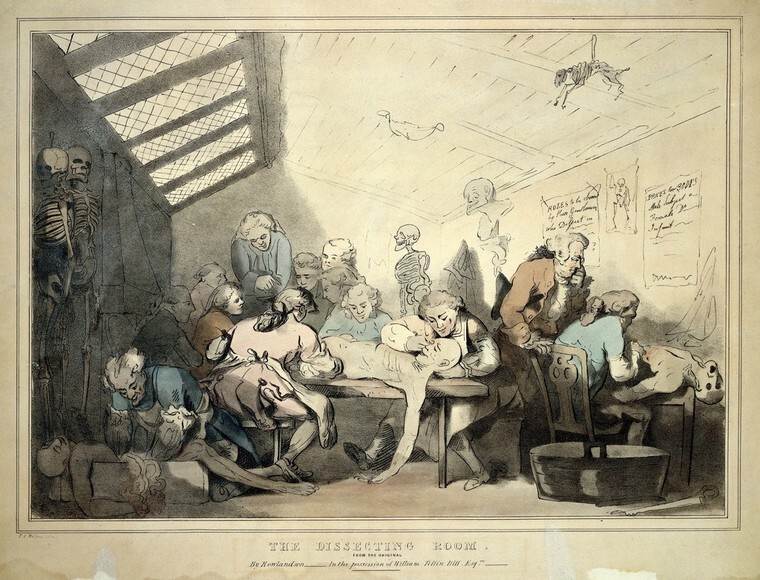
The Dissecting Room
The inside of a dissecting room, filled with physicians, family members, and legal representatives.
Who Got Autopsied
Written by M.B.
In the 1500s, autopsies were a rarely utlizied tool, only used sparingly on members of the royal family, often not being refered to as autopsy, but rather a part of the exuhamtion and preservation process for the corpses of the royal family members. Disturbing a body beyond the purpose of preservation was considered to be a a great dishonor to the body in the very least, and a criminal act punishable by prison time at the worst. This hesitancy and condemmning of autopsies as a medical and legal tool was a product of the animalist theology.
The Legal Benefits of Cutting Into People
There were many cases of deaths being mysterious or ruled "death by natural causes" when those deaths were anything but that. Many of these deaths were actually murders, usually via poisoning. This would happen even in the royal family, where someone would die of what appeared to be some kind of disease, but in reality they died to poison. One such case is the murder of Sir Theodosius Boughton. He was killed by a jealous friend, who wanted his wife, and was envious of his relationship with the royal family. The friend's name was John Donellan, and he used small doses of mercury and arsenic in his food to kill Sir Boughton. These small doses caused his health to decline, and resulted in a death that was labeled as a death by natural and unfortunate cause of disease. But after Sir Boughton was found dead, he was taken to be enbalmed by a physician, who found that he had damage internally that was indicative of being poisoned. Thus, a case was opened in which John Donellan was foudn guilty for murder and was hanged for his crimes.
This is one case where an autopsy resulted in a murderer being apprehended, there are many other cases like this that can be found throughout history, where someone had died by what seemed natural, and was later discovered to have been murdered.
Bibliography
A Genuine Account of the Most Horrid Parricide Committed by Mary Blandy. C. Goddard, 1751. Gale Eighteenth Century Collections Online (Accessed April 12, 2026).
Donellan, John. The Trial of John Donellan, Esq. B. Thorn and Son, 1781. Eighteenth Century Collections Online (Accessed April 9, 2026).
Lawrence, Leah. “Autopsies in 1700s Provided Early Evidence against the Four Humors.” HEM/ONC Today 9, no. 4 (2008): 25.
Mitchell, Piers D., Ceridwen Boston, Andrew T. Chamberlain, et al. “The Study of Anatomy in England from 1700 to the Early 20th Century.” Journal of Anatomy. https://pmc.ncbi.nlm.nih.gov/articles/PMC3162231/.
Pascalle, Halliday. “Testimony from the Dead: Examining the Use of Autopsies as a Means of Investigating Suspicious Deaths in Early Modern England.” B.A. thesis, University of Victoria, 2021. https://www.uvic.ca/humanities/history/assets/docs/honours-thesis---pascale-halliday.pdf.
Thrush, Andrew. “The Murder of Sir Thomas Overbury, 1613.” History of Parliament (Blog), October 26, 2021. https://historyofparliament.com/2021/10/26/murder-of-sir-thomas-overbury-1613/.